

A Quick Look at Jasmine Tea
Jasmine tea has a soft floral scent that makes any cup feel special. However, it offers more than aroma. Jasmine tea benefits include gentle energy, helpful plant compounds, and a calming daily ritual. Many people also use it to replace sugary drinks. At Sayfani, we like simple habits that last. Therefore, this guide shows what the tea is, how it works, and how to enjoy it. We also cover caffeine, brewing, and safety. Whether you are new to tea or a longtime fan, you will find practical ideas here. Because tea is easy to brew, you can start today with just hot water and a few leaves. Let us start with the basics.
What Jasmine Tea Really Is
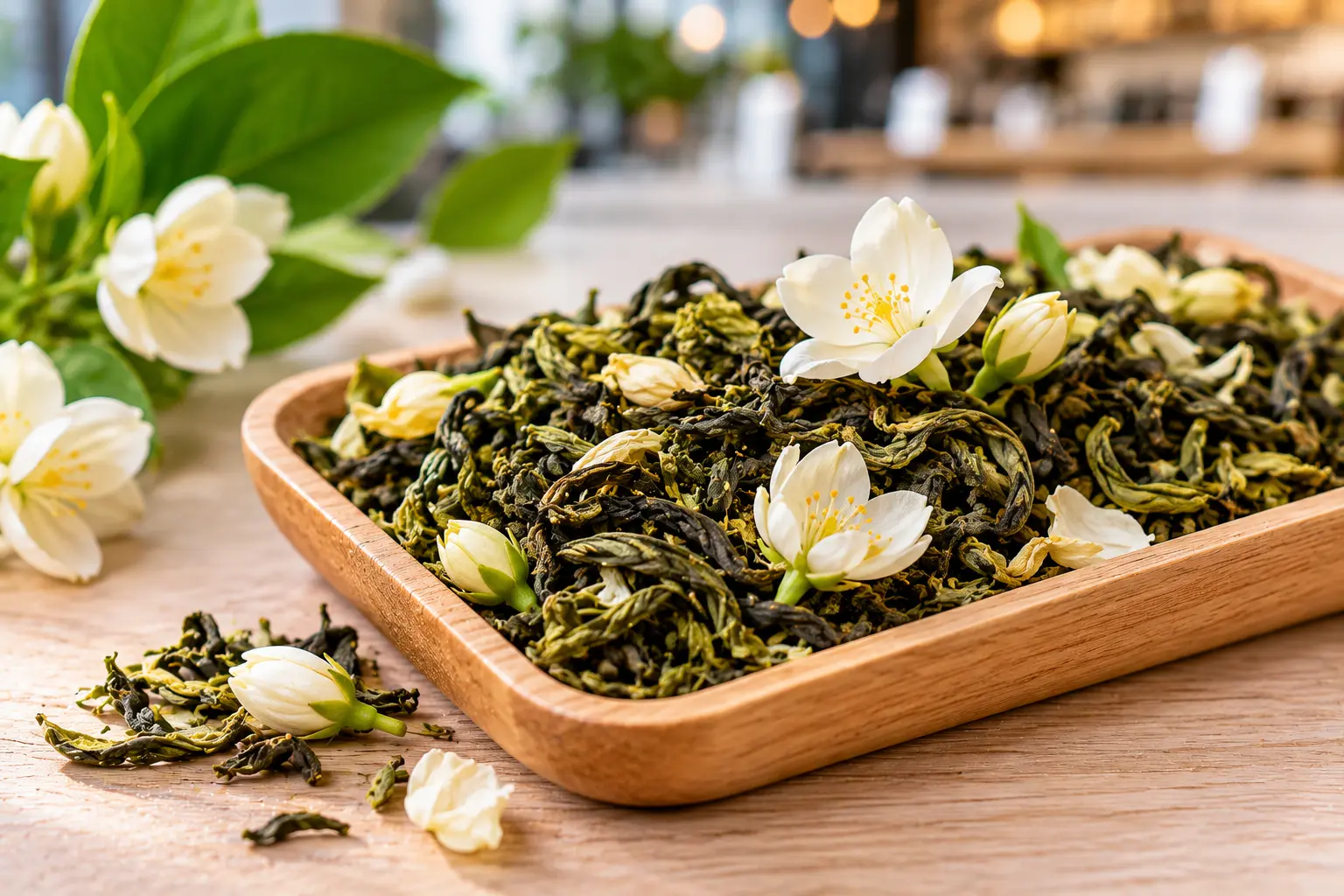
Jasmine tea is a scented tea. Makers take real tea leaves and let them absorb the aroma of fresh jasmine blossoms. Most often, the base is green tea, so many people call the cup jasmine green tea. However, makers also use white, oolong, and black tea. Because the base is a true tea leaf, it differs from a herbal drink. Pure jasmine flowers steeped alone make a caffeine-free tisane. That version is rare in stores, though. Understanding this difference helps you judge jasmine tea benefits more clearly. The leaf brings the body, the plant compounds, and the caffeine. The blossom brings the fragrance. Some blends include dried petals for looks, though the flavor comes from scenting.
How Fresh Blossoms Scent the Leaves
Traditional makers pick jasmine buds before they open. At night, the flowers bloom and release their scent. Workers then layer the blooms with tea leaves so the leaves absorb the aroma. Next, they remove the spent flowers and add fresh ones. They repeat this scenting several times. Premium teas often go through many rounds, which creates a deeper, more natural fragrance. Cheaper teas may rely on added flavoring instead. As a result, the quality of the process shapes the cup you drink. Fujian province in China is famous for this craft. Knowing this story adds meaning to the jasmine tea benefits you notice, like smooth taste and relaxing scent.
What Is Inside a Cup of Jasmine Tea
Plain brewed jasmine tea is very light. One cup has zero calories, zero protein, zero fat, and zero carbohydrates. It also has no sugar unless you add some. Meanwhile, the green tea leaves provide trace amounts of minerals such as iron, zinc, potassium, and copper. However, those amounts are small, so tea should not replace nutritious food. Instead, think of tea as a hydrating drink with natural plant compounds. Adding milk or sweetener changes the numbers, so check your own recipe. Overall, the clean profile makes jasmine tea benefits easy to fit into most eating plans.
Jasmine Tea Benefits Begin With Plant Compounds
Most of the health value comes from the tea leaf itself. Green tea contains catechins, a group of tea antioxidants that help protect cells from free radical damage. Black versions offer theaflavins, which play a similar role. Because jasmine green tea is the most common style, many of these compounds appear in your cup. Research on tea antioxidants is promising, yet it often uses high amounts or extracts. Therefore, treat tea as a helpful habit rather than a cure. Still, jasmine tea benefits grow when you drink it regularly and skip added sugar. Meanwhile, these compounds also give tea its slight dryness and fresh taste.
A Gentle Lift Without the Coffee Crash
Jasmine tea caffeine levels are usually lower than coffee. One cup of green-based tea often holds around 35 milligrams, while a cup of coffee holds about 95. Therefore, you get a softer lift. Tea also contains L-theanine, a compound linked to calm focus. Together, caffeine and L-theanine may help you feel alert without the jitters. Among all jasmine tea benefits, this balanced energy is one of the easiest to notice. This can help during long study or work sessions. Caffeine still varies by leaf, brew time, and cup size. For example, loose leaf usually extracts more slowly than small teabag pieces. Moreover, tea has no sugar, so you avoid an energy crash from sweet drinks.
Support for Your Heart Over Time
Several studies link regular green tea drinking with better heart health markers. Some research shows lower LDL cholesterol and triglycerides. The flavonoids and catechins in tea may also calm inflammation inside blood vessel walls. However, most studies track long-term habits, not single cups. For that reason, jasmine tea benefits for the heart work best alongside balanced meals, movement, and good sleep. In addition, swapping a sweet soda for an unsweetened cup removes extra sugar from your day. Therefore, think of tea as one supportive piece of a healthy lifestyle. If you have a heart condition, check with your doctor first because caffeine affects heart rhythm in some people.
Aroma and Mood Support for Evening Calm
Scent plays a real role in how this tea feels. One study found that the smell of jasmine tea improved mood and calmed the nervous system. Researchers traced part of that effect to linalool, a compound in jasmine fragrance. Meanwhile, the simple act of brewing slows you down. Many jasmine tea benefits come from this mix of aroma and routine. Because jasmine tea caffeine is present, enjoy it in the afternoon rather than right before bed. For most people, a late-afternoon cup helps you unwind after work. Add a few slow breaths while the leaves steep for an extra calming pause.
Jasmine Tea Benefits for Weight and Sugar Goals
Plain jasmine tea has zero calories, zero sugar, and zero fat. That makes it an easy swap for juice, soda, and sweet coffee drinks. Some research on green tea suggests it may support weight management when paired with a healthy diet. However, tea is not a fat burner. The real win is replacing high-calorie drinks with a flavorful option you enjoy. As a result, many people find jasmine tea benefits easier to maintain than strict rules. Skip honey and milk if you want zero calories. Alternatively, add a small spoon of honey and keep the rest of your day balanced.
Gentle Help for Digestion and Hydration
A warm cup of tea can feel soothing after a meal. Tea also counts toward your daily fluid intake, which supports digestion. Early lab studies suggest jasmine oil may fight certain harmful bacteria, including E. coli. Researchers also link its properties to fewer cavity-causing bacteria. Still, these findings come from lab settings, so human proof remains limited. Therefore, view these as possible extras among jasmine tea benefits, not guaranteed results. If strong tea upsets your stomach, brew it lighter. Also, avoid drinking it on an empty stomach if you feel queasy. Moreover, a warm cup after dinner can replace a heavy dessert drink.
Easy Ways to Fit It Into Your Day
Start simple. Brew a cup with breakfast instead of a second coffee. Curious about coffee drinks? Read our cortado vs latte guide. Keep a thermos on your desk for midmorning focus. In the afternoon, pour a cup beside a light snack. Jasmine pairs well with fruit, rice dishes, dumplings, and mild desserts. For summer, chill a strong brew and serve it over ice. Because you enjoy the ritual, you will stay consistent, and consistency is where jasmine tea benefits add up. Try one cup daily for a week. Then adjust the timing and strength to match your routine. Pack loose leaf in a small tin for travel and office days. Meanwhile, keep the tin sealed so the leaves stay fragrant.
How to Brew Jasmine Tea for Better Flavor
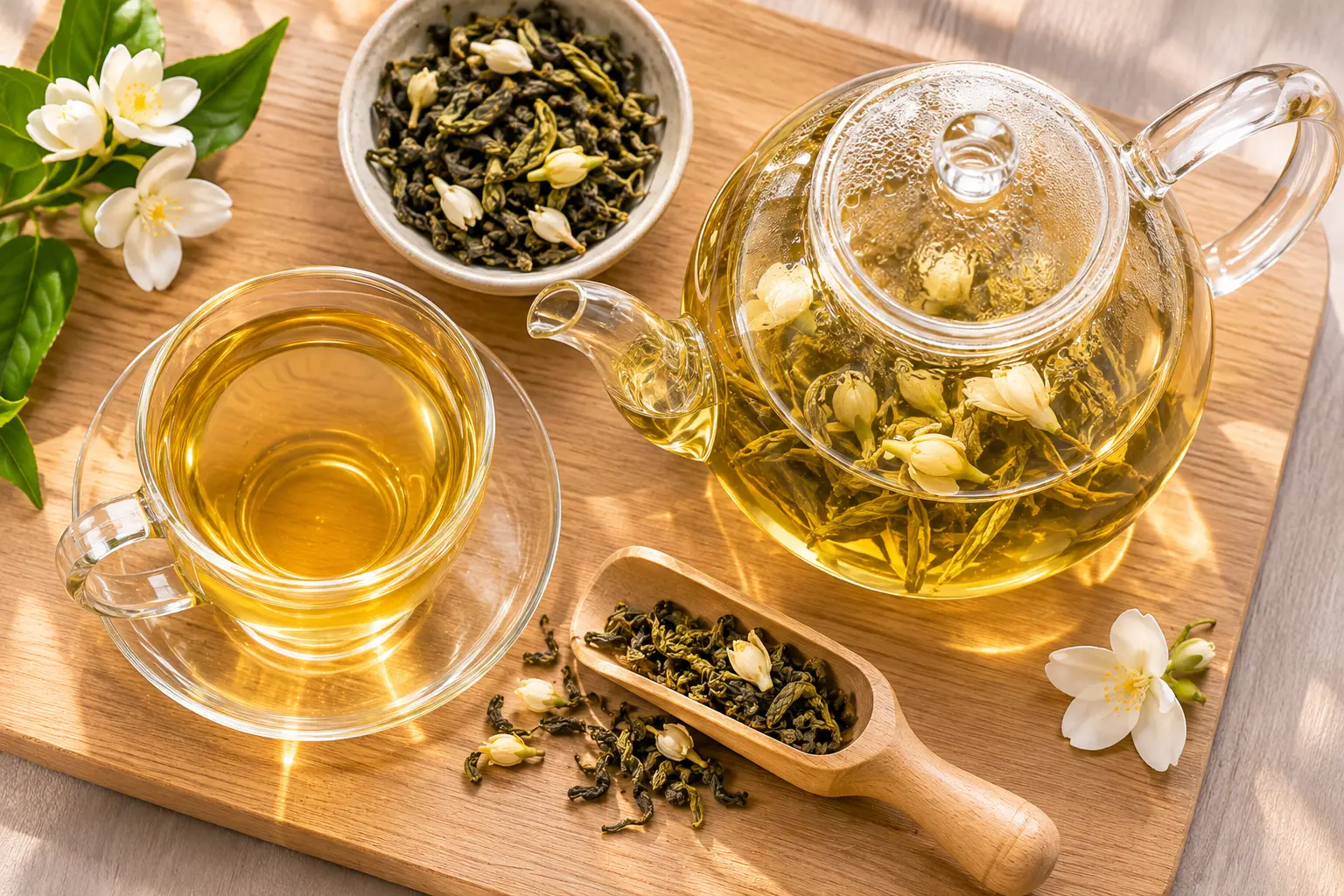
Good brewing protects both flavor and jasmine tea benefits. Boiling water can flatten the floral notes and push bitterness forward. For jasmine green tea, heat water to about 175 to 185 degrees Fahrenheit. Use roughly two grams of leaf per 240 milliliters of water. Steep for two to three minutes. Pearls may need a little longer and often give several infusions. Black versions handle hotter water. If the cup tastes harsh, shorten the steep or lower the temperature. Use fresh water for the cleanest taste. Once you know how to brew jasmine tea well, every cup tastes cleaner and smoother.
Jasmine Tea Benefits and Safety Tips
Jasmine tea suits most healthy adults, yet it is still tea. Caffeine can cause jitters, a fast heartbeat, or poor sleep in sensitive people. Therefore, drink it earlier in the day if you notice trouble. Green tea also contains oxalates, which may raise kidney stone risk for prone people. In addition, concentrated green tea extracts appear in rare liver problem reports. Brewed tea is the safer choice. Pregnant women and anyone on medication should ask a doctor about caffeine intake. Also, avoid very strong brews if you feel anxious. Overall, moderation keeps jasmine tea benefits high and risks low.
How to Choose Quality Jasmine Tea
Start with the scent. Good jasmine tea smells natural, clean, and balanced. Avoid anything that smells like perfume or air freshener. Next, look at the leaves. Whole or mostly whole leaves usually signal better handling than dust. Also check whether the seller names the tea base and mentions repeated scenting. Finally, taste the cup. You should still taste tea, not only flowers. Store leaves in a sealed, dry container away from coffee and spices because tea absorbs odors fast. Better quality leaves help you enjoy jasmine tea benefits in every infusion. Premium leaves often give two or three good infusions.
Make Jasmine Tea Benefits Part of Your Routine
Jasmine tea offers a gentle mix of flavor, comfort, and plant compounds. The strongest jasmine tea benefits come from steady habits, not one perfect cup. Choose quality leaves, brew them with care, and keep portions moderate. Then pay attention to how you feel. If caffeine bothers you, switch to earlier cups or lighter brews. Prefer a creamier cup? Try adeni tea, a spiced Yemeni milk tea. At Sayfani, we believe small daily rituals make healthy living easier. So start tomorrow with one cup, and let the habit grow naturally. Remember that tea supports a healthy lifestyle but does not replace medical care. When health questions arise, speak with your doctor.